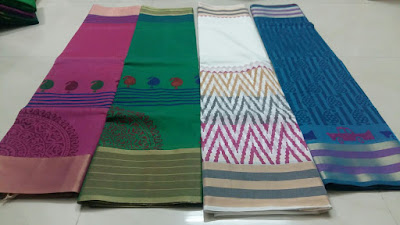
The World of fashion keeps evolving. From bell bottom pants to polka dot dresses we have seen it all come and go from time to time. In this transforming world when there are no fixed addresses for fashion what is that one wear that has always given a complete diva styling to an Indian woman. It is rightly said for Indian traditional wear that a saree never goes out of style.
We have welcomed every change very warmly and experienced every fashion era in our times but nothing feels better than a saree whether it is about attending a big fat wedding or regular day wear for an Indian woman.
How much have the trends changed?

It has been seen in past years that one thing runs out of fashion very quickly. There have been times when long coats and oversized clothes used to be fashionable and then it was not but soon it again became fashionable. From folding edges of your jeans to wearing it high on your waist it has all been in and out. Similar was the story for many other fashion statements.
Indian Ethnic Wear
Though there have never been so many changes in Indian traditional and ethnic wear it has still been one of the most favorites. Ethnic wear gives a traditional and authentic feeling that is undoubtedly beautiful and cannot be summed up in words and just be seen in a diva’s smile.
Sarees have been one traditional wear that has always given a diva feel to a girl irrespective of her age. Every Indian girl has wished to wear a saree since her childhood and as she grows with time she gains more and more affection for her saree.
Traditional Wear and Saree
Sarees have always been a synonym for traditional wear and it has always been there from wedding ceremonies to family gatherings and for everyday wear. Sarees not only makes a girl look gorgeous but also gives comfort that no other outfit can give and the best thing is that it is affordable for all of us, from someone wanting to spend lacks of rupees on fashion to someone who just has a pocket size of a few hundred.
Sarees in Jaipur
Jaipur has always been rich by culture and art. The culture has evolved a lot from Rajputana Traditional wear to present when the city is not entirely filled with people from one religion. There are people with multiple other religious beliefs however the majority is still of Hindus.
Sarees from Jaipur are famous all around the world for various reasons such as hand block printing which is an art to see and still an amazement factor to many of us. Jaipur has always had the essence of the traditional culture in every possible way and there are manufacturers of saree in Jaipur who still ensure that the essence does not go away. There is a large variety of Jaipur saree manufacturers around you which can give you a genuine traditional experience with quality products.
Manufacturing of Sarees
Sarees may seem like a simple length of a piece of cloth but there is a lot in there. It is a fact that there has not been much change in the traditional wear but at the same time, it is also a fact that there have been many evolutions in terms of how the traditional wear is accepted by all generations. From the material to the designs a lot of things have changed to get better and better but who is taking up that effort to improve our traditional clothing?
Well, the answer is the professional Jaipur Saree Manufacturers who are taking up this effort and trying to make a simple saree look gorgeous and exciting for divas of all age groups. These manufacturers not only focus on producing a large amount of their product but also focus on the evolving needs of new generations. There are a professional designer and the team who are there monitoring activities of current fashion era very closely and accordingly deciding for color, material, designs and other very important aspects which clearly shows the importance that is given to our culture.
So if you want to be wrapped up with authentic Indian traditional wear, a saree is your answer.
Source: Click Here
Saree Wholesaler in India
We have welcomed every change very warmly and experienced every fashion era in our times but nothing feels better than a saree whether it is about attending a big fat wedding or regular day wear for an Indian woman.
How much have the trends changed?

It has been seen in past years that one thing runs out of fashion very quickly. There have been times when long coats and oversized clothes used to be fashionable and then it was not but soon it again became fashionable. From folding edges of your jeans to wearing it high on your waist it has all been in and out. Similar was the story for many other fashion statements.
Indian Ethnic Wear
Though there have never been so many changes in Indian traditional and ethnic wear it has still been one of the most favorites. Ethnic wear gives a traditional and authentic feeling that is undoubtedly beautiful and cannot be summed up in words and just be seen in a diva’s smile.
Sarees have been one traditional wear that has always given a diva feel to a girl irrespective of her age. Every Indian girl has wished to wear a saree since her childhood and as she grows with time she gains more and more affection for her saree.
Traditional Wear and Saree
Sarees have always been a synonym for traditional wear and it has always been there from wedding ceremonies to family gatherings and for everyday wear. Sarees not only makes a girl look gorgeous but also gives comfort that no other outfit can give and the best thing is that it is affordable for all of us, from someone wanting to spend lacks of rupees on fashion to someone who just has a pocket size of a few hundred.
Sarees in Jaipur
Jaipur has always been rich by culture and art. The culture has evolved a lot from Rajputana Traditional wear to present when the city is not entirely filled with people from one religion. There are people with multiple other religious beliefs however the majority is still of Hindus.
Sarees from Jaipur are famous all around the world for various reasons such as hand block printing which is an art to see and still an amazement factor to many of us. Jaipur has always had the essence of the traditional culture in every possible way and there are manufacturers of saree in Jaipur who still ensure that the essence does not go away. There is a large variety of Jaipur saree manufacturers around you which can give you a genuine traditional experience with quality products.
Manufacturing of Sarees
Sarees may seem like a simple length of a piece of cloth but there is a lot in there. It is a fact that there has not been much change in the traditional wear but at the same time, it is also a fact that there have been many evolutions in terms of how the traditional wear is accepted by all generations. From the material to the designs a lot of things have changed to get better and better but who is taking up that effort to improve our traditional clothing?
Well, the answer is the professional Jaipur Saree Manufacturers who are taking up this effort and trying to make a simple saree look gorgeous and exciting for divas of all age groups. These manufacturers not only focus on producing a large amount of their product but also focus on the evolving needs of new generations. There are a professional designer and the team who are there monitoring activities of current fashion era very closely and accordingly deciding for color, material, designs and other very important aspects which clearly shows the importance that is given to our culture.
So if you want to be wrapped up with authentic Indian traditional wear, a saree is your answer.
Source: Click Here
Saree Wholesaler in India